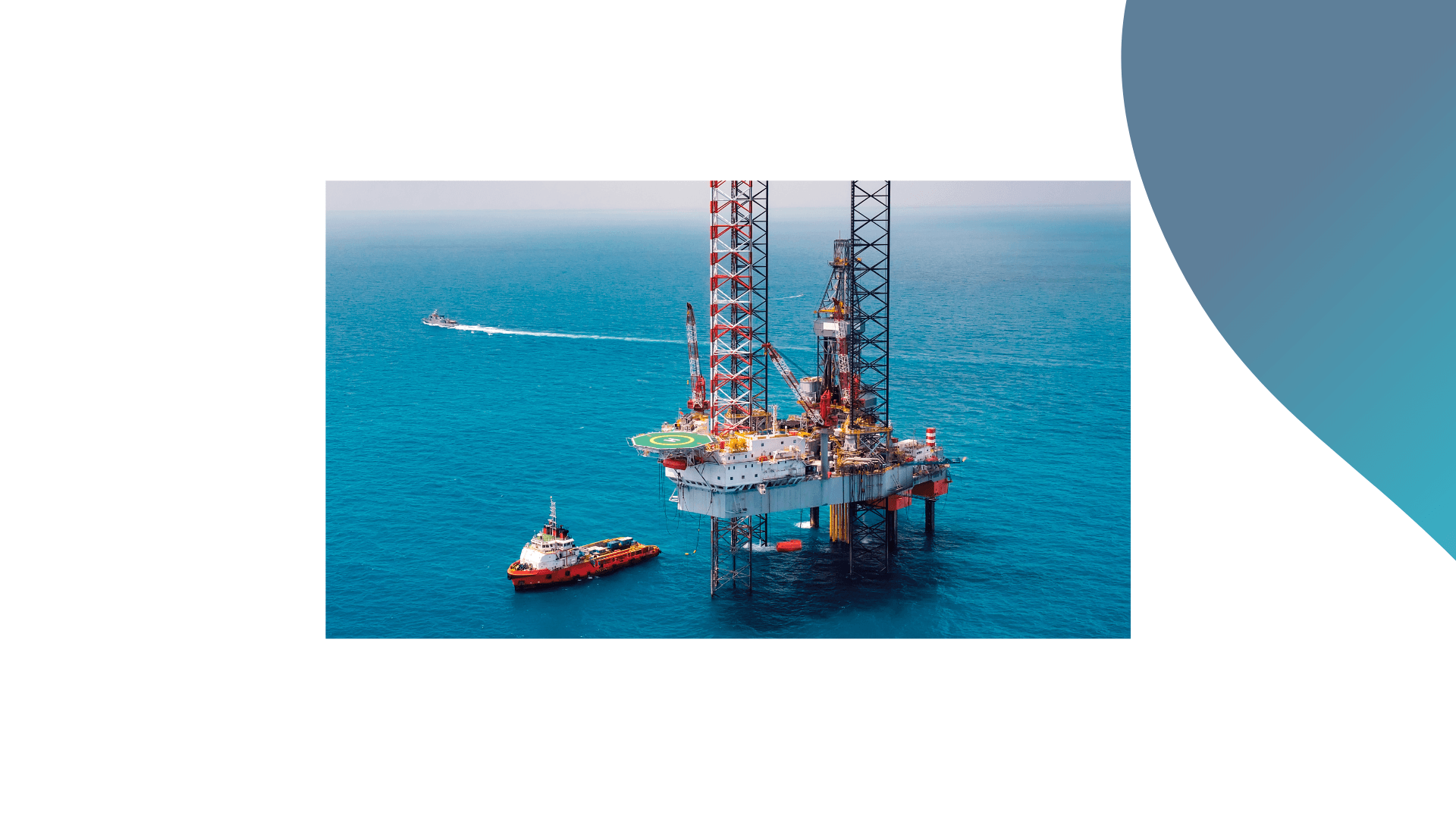
In March 2019, the Commercial Court in London handed down judgment in a case that reads less like a shipping dispute and more like a manual on how procurement fraud actually happens. At its centre: US$87 million paid by an Iranian state company for an offshore drilling rig that it never received. Ten years on, the case is still one of the clearest illustrations of what can go wrong when payment is decoupled from verified delivery, and when the people approving a deal have a personal stake in it closing.
The deal
The buyer was the Iranian Offshore Engineering and Construction Company (IOEC), a state-affiliated contractor in Iran’s oil and gas sector. The asset was the GSP Fortuna, a jack-up drilling rig owned by Grup Servicii Petroliere (GSP), a Romanian offshore services company, through a Maltese subsidiary. The transaction was agreed in 2012, at a time when EU and international sanctions restricted the direct sale or supply of drilling equipment to Iranian entities, IOEC was itself named in the relevant EU sanctions regulation. Because IOEC could not buy the rig directly from GSP, a third-party company, Dean Investment Holdings SA, previously registered as Dean International Trading S.A. and controlled by an entrepreneur named Reza Mostafavi Tabatabaei, was interposed as an intermediary. The plan, as originally structured, had Dean agreeing to buy two rigs from GSP “en bloc”: the GSP Fortuna for US$66 million and a second rig, the GSP Britannia, for US$21 million, a combined US$87 million. Dean would then sell the Fortuna on to IOEC.
Shortly before the first payment was made, the arrangement was restructured. The link between the two rigs was removed, and Dean’s price for the Fortuna alone with GSP was raised to US$67 million. IOEC’s payment to Dean, however, stayed at US$87 million, now routed as a “cash-back” arrangement rather than tied to the price of a second rig. The court later found that IOEC’s own governing documents contained no record that the company had ever agreed to acquire, or contribute toward, the Britannia, the wider price had been known only to two of its own senior people.
Payment moved in stages from mid-2012, structured through an intermediary outside Iran because of the sanctions restrictions on direct transfers. An initial deposit of roughly US$17.4 million was paid to a “Dean Legal” account in July 2012, of which about US$13.4 million (20% of the revised Fortuna price) was forwarded to GSP’s subsidiary as a deposit.
Where it broke down
The closing date under Dean’s purchase agreement with GSP was 17 September 2012. It passed with no further payment from Dean and no extension agreed. The sale from GSP to Dean was never completed, and the rig itself never moved toward Iran. IOEC nonetheless went on to pay the full US$87 million to Dean’s accounts, and the court found that a substantial portion of that sum, around US$69.6 million, was paid after IOEC’s own Managing Director and his adviser already knew the underlying purchase agreement with GSP had lapsed. Funds paid by IOEC were distributed onward to the broker’s company and, from there, to IOEC’s own adviser as what the judgment described as a bribe. One of the defendants was also found to have forged a bank letter to explain why the money was not being returned.
In short: the rig was never delivered because it was never actually acquired by the intermediary in the first place, and the buyer kept paying regardless.
The judgment
IOEC eventually sued Dean, its controllers, and the individuals involved, including its own former Managing Director, in the English Commercial Court (Iranian Offshore Engineering and Construction Company v Dean Investment Holdings SA & Ors [2019] EWHC 472 (Comm)). Mr Justice Butcher found that IOEC had been the victim of a fraud, with its own Managing Director and his adviser central to arranging payments they knew to be detrimental to the company, in order to generate secret profits for themselves and their collaborators. The broker, Mr Tabatabaei, and his company were found to have played a central role in structuring and distributing the proceeds.
The defendants raised one further defence: that because the underlying structure had been designed to get around EU sanctions on supplying Iran, the court should refuse to hear IOEC’s claim at all on public-policy grounds. The judge rejected this. Applying the UK Supreme Court’s test in Patel v Mirza, he held that IOEC was not asking the court to enforce the sanctions-breaching sale contract, it was seeking to recover money taken from it through fraud by its own personnel, which was a separate wrong the sanctions regime was never designed to shield.
It’s worth noting that this court-tested account differs in emphasis from versions later given in Iranian media, in which the broker described the non-delivery as a straightforward commercial matter, GSP allegedly cancelling over payment delays, rather than a fraud. The English court, after a full trial with documentary evidence and cross-examination, did not accept that framing.
Why it matters for procurement
Strip away the sanctions context and the geopolitics, and the mechanics are familiar to anyone who has reviewed a high-value, cross-border procurement file:
Payment moved ahead of verified title: IOEC paid the bulk of the price to an intermediary that had never itself completed its purchase from the actual owner. No one on the buying side independently confirmed that the intermediary held, or was about to hold, good title to the asset before further tranches went out.
A newly formed intermediary sat between buyer and seller: Dean was a vehicle with no operating history in the sector, controlled by the broker who arranged the deal. Interposing an unproven counterparty between a buyer and the actual manufacturer or asset owner removes a layer of accountability and makes it far harder to trace where money, and responsibility, actually sits.
A price increase went unquestioned: The gap between the rig’s contracted value with the seller (US$66-67 million) and the price paid by the buyer (US$87 million) was allowed to persist even after the stated justification for it, the linked purchase of a second rig, had been dropped from the underlying contract. A pricing anomaly that survives a change in its own justification is a signal worth escalating.
Approval and payment sat with the same conflicted individuals: The court found that IOEC’s own Managing Director and his adviser drove the deal through, including continuing to release funds after they knew the underlying purchase had collapsed. Segregating who negotiates a deal from who authorises payment on it, and requiring independent sign-off before large releases, is a basic control this case shows can otherwise be entirely absent.
Milestone and delivery verification were missing: There is no indication that payment was tied to independently confirmed delivery milestones, escrow release conditions tied to physical or documentary proof of transfer, or a performance bond that would have made non-delivery costly for the seller side rather than the buyer.
Objections inside the organisation were overridden: The judgment records that payments continued in the face of internal concerns. A scandal of this scale is rarely invisible while it’s happening. The more telling failure is often that internal red flags exist but lack the authority, escalation path, or independence to stop payment.
For a public buyer, the lesson is that verification has to be structural, independent confirmation of ownership and delivery, payment gated to milestones rather than trust, and a hard separation between the people who want a deal to close and the people with the authority to release funds for it.
Background Reading and Additional Sources:
England and Wales High Court (Commercial Court) Decisions https://www.bailii.org/ew/cases/EWHC/Comm/2019/472.html
What are the circumstances in which acting in breach of EU sanctions will kill a claim?https://www.rpclegal.com/thinking/commercial-disputes/what-are-the-circumstances-in-which-acting-in-breach-of-eu-sanctions-will-kill-a-claim/
A Tale of Corruption: The Missing $88million Oil Righttps://iranwire.com/en/economy/61355/
Iranian Offshore Engineering and Construction Company v Dean Investment Holdings https://www.casemine.com/judgement/uk/5c7e03512c94e03890f0f6e5
The “presumption” of English law: Iranian Offshore Engineering and Construction Company v Dean Investment Holdings S.A. et al https://essexcourt.com/publication/the-presumption-of-english-law-iranian-offshore-engineering-and-construction-company-v-dean-investment-holdings-s-a-et-al/


