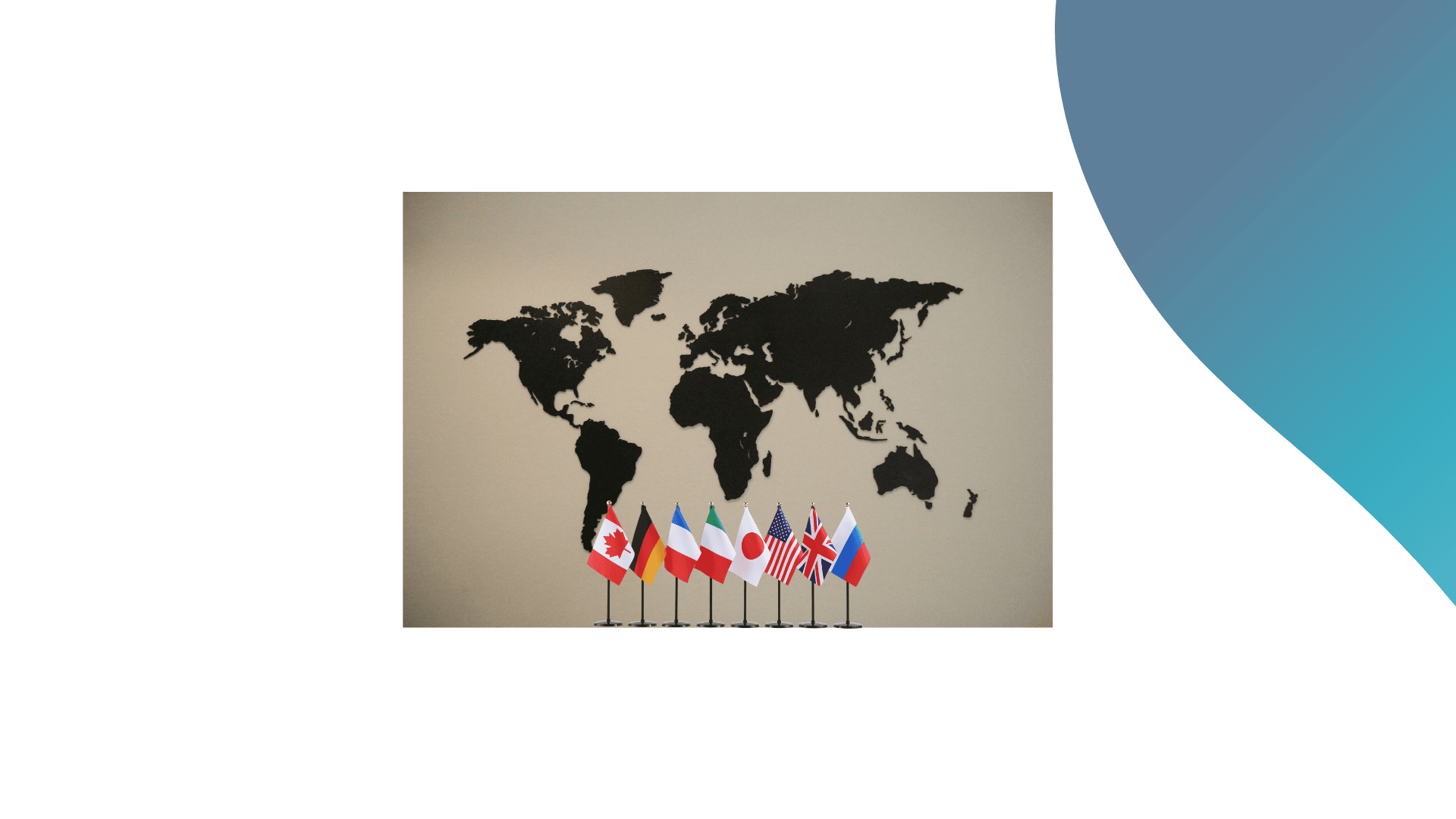
For decades, public procurement often prioritised cost efficiency, with contracting authorities frequently favouring the lowest-priced bids in globalised supply chains. That model has been challenged in recent years. The COVID-19 pandemic and Russia’s invasion of Ukraine exposed critical vulnerabilities, from medical shortages to energy dependence.
In response, governments across the United States, Europe, and beyond are shifting priorities toward resilience, supply diversification, and the protection of strategic industries. The question is no longer simply “Who is cheapest?” but increasingly “Who is reliable?” and “Can we afford to depend on them?”
The World Before: The Efficiency-First Era
The post-Cold War era gave rise to a global trade system built on Comparative Advantage and cost efficiency. Multinational corporations spread supply chains across dozens of countries, optimising for labour, tax, and production costs. Public procurement often followed this logic, frequently favouring the lowest-priced bids in globalised markets. China became the factory of the world. Russia supplied much of Europe’s energy, while Ukraine fed large parts of the globe. The system delivered efficiency, but created deep interdependencies.
The cracks were already visible before 2020. The US-China Trade War began fragmenting trade, and the International Monetary Fund has noted a growing concentration within geopolitical blocs. The pandemic ultimately made these vulnerabilities impossible to ignore.
COVID-19: The Moment the System Broke
The PPE Crisis
The first visible failure of the efficiency-first model was in personal protective equipment. As COVID-19 spread globally in early 2020, hospitals and governments discovered that most masks, gloves, and gowns were produced in just a few countries, primarily China.
The consequences were severe, The WHO estimated millions of masks, gloves, and goggles were needed monthly, while demand surged far beyond supply. Prices for isolation gowns and N95 masks spiked dramatically, and months into the pandemic, many healthcare facilities still lacked adequate PPE. In the US, federal stockpiles proved insufficient, and state-level procurement often failed to fill gaps.
Semiconductors, Automotive, and the Domino Effect
Supply chain disruptions extended well beyond healthcare. Semiconductor shortages from factory closures in Asia, combined with a surge in electronics demand, forced companies like Ford and GM to temporarily halt production. Industries reliant on just-in-time inventories were particularly exposed.
The pandemic did not create new vulnerabilities so much as expose pre-existing ones. Surveys found that nearly all hospital leaders recognized significant supply chain weaknesses. The message was clear: global efficiency had come at the cost of resilience.
The War in Ukraine: A Geopolitical Accelerant
If COVID-19 was the stress test that revealed the structural weaknesses of global supply chains, Russia’s invasion of Ukraine in February 2022 was the shock that turned a theoretical concern into a live geopolitical crisis. What had been a fragile system suddenly became an openly contested one.
Energy: Europe’s Dangerous Dependency
Before the invasion, Russia was the world’s third-largest oil exporter and a major supplier of natural gas to Europe. Brent crude prices surged toward $100 per barrel, while European gas and coal prices more than doubled and rose sharply, respectively. The World Bank described it as “the largest commodity shock since the 1970s.” The EU moved quickly, committing to phase out dependence on Russian fossil fuels, banning almost 90% of Russian oil imports by the end of 2022, and setting gas storage and demand reduction targets.
Food and Agriculture: The Breadbasket Under Fire
Russia and Ukraine together accounted for roughly 29% of global wheat and 17% of corn exports. Wheat futures briefly reached $13.50 per bushel in March 2022, up nearly 90% from the previous year. Disruption of Ukrainian exports and fertilizers threatened food security globally, with the World Bank warning that price spikes could stall progress on poverty reduction.
Critical Inputs: Neon, Palladium, and the Semiconductor Chain
Ukraine supplies significant amounts of neon for chip manufacturing, while Russia provides around a third of the world’s palladium. Sanctions and supply disruptions exposed vulnerabilities in technology supply chains previously underappreciated, highlighting the fragility beneath global efficiency.
The Policy Response: From Efficiency to Strategic Procurement
The twin shocks of the pandemic and the Ukraine war catalysed a global rethink of procurement doctrine. Governments across the democratic world began implementing policies that prioritised resilience, domestic capacity, and allied supply networks over lowest cost. This shift is now visible in legislation, regulatory frameworks, and procurement rules on both sides of the Atlantic.
The United States: Industrial Policy Returns
The Biden administration’s legislative response was the most ambitious reshoring programme in American history. The CHIPS and Science Act of 2022 provided $52.7 billion over five years to boost semiconductor manufacturing, research, and workforce development in the United States. By May 2024, $32.8 billion had been allocated from the Act’s $39 billion manufacturing incentive fund, with federal loans and tax credits projected to reach $75 billion in total.
The Inflation Reduction Act of 2022 (IRA) pursued a parallel agenda in clean energy and electric vehicles, using public procurement rules and tax credits to require that components be sourced domestically or from free-trade-agreement partners. EV battery manufacturers, for example, must ensure that 50 per cent of the critical minerals used in batteries are extracted and processed in the US or allied nations, a figure set to rise to 80 per cent by 2027. The Biden administration further institutionalised this approach with an Executive Order on Supply Chain Resilience in June 2024, establishing the White House Council on Supply Chain Resilience. The order made explicit that the US needed ‘resilient, diverse, and secure supply chains to ensure our economic prosperity, public health, and national security.’
It is notable that the Trump administration, despite its opposition to many Biden-era policies, has largely continued the directional shift towards domestic production and allied supply chains, pursuing it through different tools, including tariffs and an ‘onshoring’ rather than ‘friendshoring’ approach to critical minerals.
The European Union: From Free Market to Strategic Instrument
Europe’s response has been equally sweeping, if more complex to navigate given the need to align 27 member states and respect WTO obligations. The EU’s approach has taken several distinct legislative forms.
The Net Zero Industry Act (NZIA), adopted in 2024, introduced ‘resilience criteria’ into public procurement for the first time, requiring public buyers to diversify supply sources in strategic technology sectors where the EU is dependent on a single supplier for more than 50 per cent of its imports. This represented a significant departure from the EU’s traditional approach to procurement, which had been based almost exclusively on lowest cost.
The EU’s Competitiveness Compass, published in January 2025, outlined three core pillars: innovation, decarbonisation, and security. It called explicitly for the introduction of a ‘European preference in public procurement for strategic sectors and technologies.’ The Clean Industrial Deal followed in February 2025, proposing the establishment of an EU Critical Raw Materials Centre by the end of 2026, to coordinate joint purchases and manage strategic stockpiles.
The Commission’s proposed Industrial Accelerator Act, published in March 2026, goes further still, introducing minimum shares of low-carbon, EU-origin products that must be used in public procurement and public support schemes in energy-intensive industries, with the ambition of raising the share of strategic sectors in EU GDP from under 15 per cent to 20 per cent by 2035. The European Parliament, for its part, adopted a resolution in September 2025 calling for procurement to move beyond the ‘lowest price trap’, noting that the European Court of Auditors’ Special Report 28/2023 found that in most member states, contracts continued to be awarded on the basis of lowest price, in some cases in up to 95 per cent of tenders. The resolution called for resilience, innovation, and European industrial capacity to be embedded as award criteria across public procurement.
The 2023 Foreign Subsidies Regulation (FSR) and the 2022 International Procurement Instrument (IPI) completed the picture, giving the EU new tools to challenge unfair competition from state-subsidised foreign firms and to restrict access to EU procurement markets for countries that do not offer reciprocal access, a provision deployed, in its first major application in June 2025, to exclude Chinese medical device manufacturers from certain EU public tenders.
The Critical Sectors at the Centre of the Debate
Semiconductors
The US share of global chip production fell from 37% in 1990 to around 10% before the CHIPS Act, with advanced manufacturing concentrated in Taiwan and South Korea. TSMC alone accounts for roughly 55% of advanced logic chip fabrication. Analysts estimate that a disruption, whether from conflict in the Taiwan Strait or export restrictions, could cost over $1 trillion globally. China produces around 98% of the world’s gallium, used in high-performance chips, and has signaled restrictions on exports of gallium, germanium, and graphite to the US.
Pharmaceuticals and Medical Supplies
COVID-19 highlighted dependence on imported PPE. The US imported most of its masks, gloves, and eye protection, a reliance that proved catastrophic in 2020. The EU has since proposed joint procurement frameworks, with the Letta Report recommending collective purchasing of critical healthcare materials.
Energy
Russia’s 2022 gas supply cuts exposed the EU’s energy vulnerability. The EU accelerated its transition from Russian fossil fuels through investments in LNG, renewables, and storage. The REPowerEU plan aimed to reduce EU gas dependence on Russia by two-thirds within a year.
Critical Raw Materials
The green transition has created new dependencies. China dominates processing of lithium, cobalt, and rare earths, essential for EVs and renewable technologies. The EU’s Critical Raw Materials Act (2024) set targets for domestic production and processing, and introduced resilience criteria into procurement for technologies reliant on these materials.
What Comes Next: The Procurement Landscape to 2030
Several trends are likely to define the procurement landscape over the next five years.
Mandatory resilience criteria will expand: The EU’s proposed revision of its public procurement directives, expected in late 2026, will likely mainstream non-price criteria across all major contracting authorities. The Industrial Accelerator Act, if adopted in its current form, will introduce hard requirements for EU-origin content in energy-intensive sectors. These precedents will prove difficult to reverse.
Joint procurement will grow: The EU’s plan to establish a Critical Raw Materials Centre for coordinated purchasing, combined with the IPEF supply chain framework and existing joint EU defence procurement initiatives, suggests that multilateral procurement co-ordination will become an increasingly important tool. The OECD has advocated for coordinated stockpiling as a more efficient alternative to duplicated national reserves.
Verification and compliance will become a major challenge: As procurement rules increasingly require domestic or allied-nation content, verifying those claims will become both commercially important and politically contested. The EU’s new instruments, the Foreign Subsidies Regulation, the IPI, and incoming cybersecurity requirements, suggest a significant expansion of due diligence obligations for suppliers.
The efficiency dividend will narrow: As more countries invest in resilient supply chains simultaneously, competition for skilled labour, factory capacity, and natural resources in preferred supplier countries will intensify. The cost advantage of nearshoring over offshoring will improve as domestic capacity scales, but the transition period will be expensive.
Geopolitical procurement will shape corporate strategy: Companies that build procurement strategies around geopolitical risk, including supply chain mapping, dual sourcing, and a clear understanding of regulatory requirements in each jurisdiction, will be better positioned than those that treat geopolitical disruption as an occasional external shock.
Governments have responded with the most significant reorientation of procurement policy in a generation. In the US, the CHIPS Act and IRA have channelled tens of billions of dollars into domestic manufacturing capacity. In the EU, a cascade of new regulations and legislative proposals is reshaping procurement from a compliance exercise into a strategic instrument of economic security. Across the globe, the logic of ‘cheapest supplier wins’ is being replaced by the logic of ‘safest, most strategic supplier preferred.’
The risks of overcorrection are real, protectionism, inefficiency, and the fragmentation of the rules-based trade order are genuine dangers that policymakers must navigate with care. The most effective approach will be one that distinguishes rigorously between sectors where domestic sovereignty is genuinely essential and those where well-managed international dependencies remain appropriate.
Background Reading and Additional Sources:
- ARC Group – Supply Chain Resilience: From Reactive to Strategic (April 2025)
- IMF – Trade Fragmentation and Geopolitical Blocs (referenced in ARC Group, 2025)
- Resilinc – Geopolitical Supply Chain Risks 2024
- S&P Global – Navigating Supply Chain Resilience
- OECD – Resilient Supply Chains Brochure 2024
- UNCTAD – Enhancing Supply Chain Resilience Amid Rising Global Risks (December 2024)
- EU Council – Impact of Russia’s Invasion of Ukraine on Markets (Consilium)
- Global Policy Watch – European Commission Publishes Proposed Industrial Accelerator Act (March 2026)
