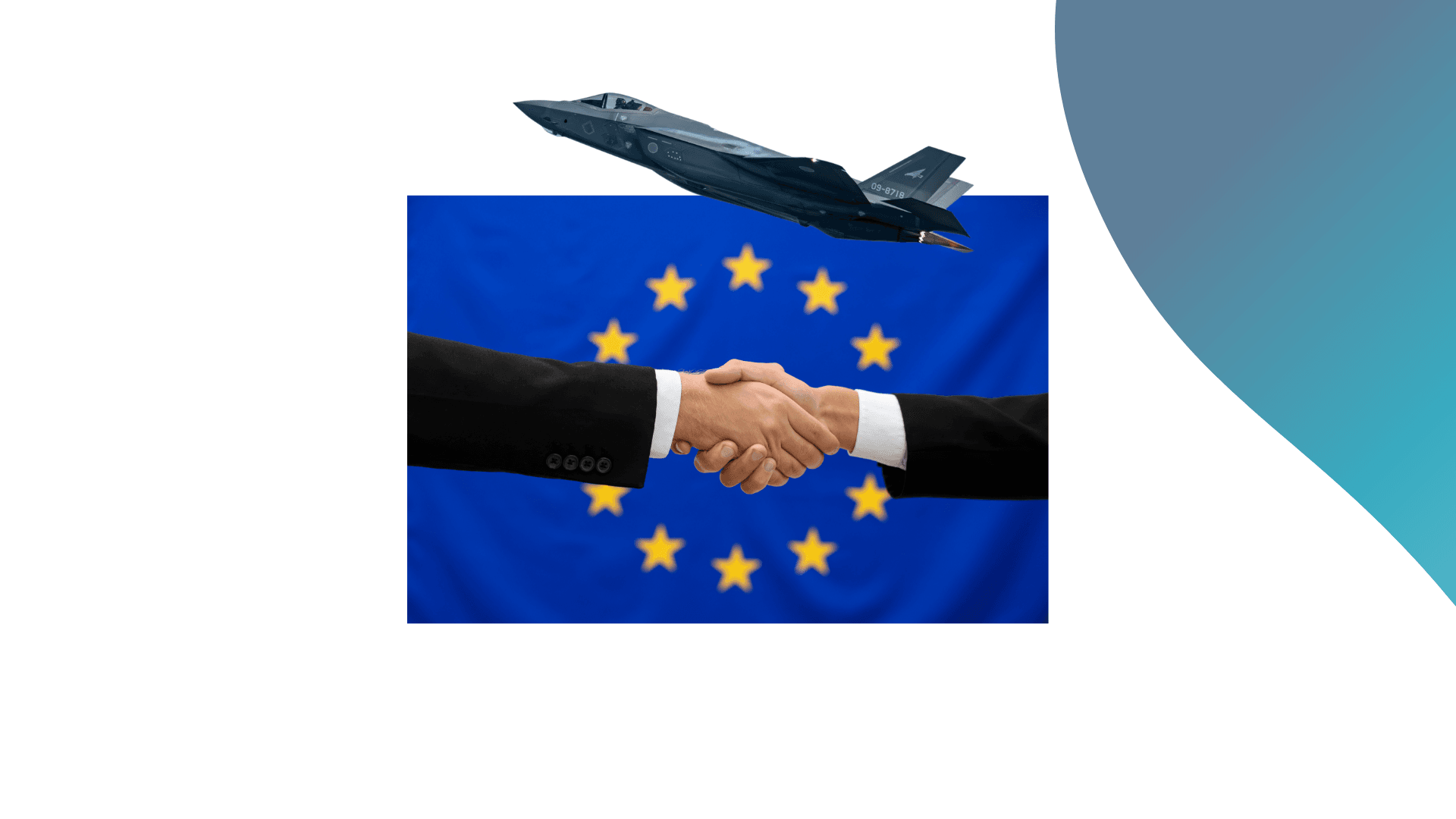
The dynamics driving French public procurement toward a defence-led, sovereignty-oriented model, large export contracts, rising domestic military budgets, technology-driven spending, and the tensions of multinational industrial programmes, are reshaping public purchasing across the whole of Europe. Across the continent, governments are deploying procurement not merely as an administrative function but as an instrument of strategic power.
A Rearmament Cycle Without Precedent Since the Cold War
European defence spending rose from €343 billion in 2024 to an estimated €381 billion in 2025, and the trajectory remains firmly upward. The EU’s Readiness 2030 initiative envisages mobilising up to €800 billion in additional fiscal space over the coming years, complemented by instruments such as the €150 billion SAFE loan facility. Across Europe, the political debate is shifting from whether to increase defence spending to how effectively it can be converted into usable military capability. Several countries, notably Poland and some northern and eastern member states, are already targeting spending levels well above NATO’s traditional 2% benchmark.
The SAFE financing framework is now moving into implementation, reflecting the EU’s effort to support large-scale defence investment. Priority capability areas include ammunition and missiles, artillery systems, drones, air and missile defence, cyber capabilities, space assets, AI-enabled systems and electronic warfare, the technologies that increasingly define modern high-intensity conflict. The debate is no longer centred on meeting NATO’s traditional 2% of GDP benchmark. A number of European states, particularly on NATO’s eastern flank, are now planning defence spending levels significantly above that threshold, treating 2% as a floor rather than a ceiling.
Germany: The Biggest Spender, Grappling With Industrial Reality
Germany’s defence spending is entering a period of historic expansion. Total military outlays are projected to reach roughly €108 billion in 2026 and could rise to around €162 billion by 2029. Following constitutional reforms that relaxed debt limits for defence expenditure, Berlin has committed to building what it describes as Europe’s strongest conventional army. The surge in demand is already transforming industry. Order backlogs at major contractors such as Rheinmetall have reached record levels, reflecting a sharp rise in procurement programmes. However, industrial capacity expansion is lagging behind political ambition, highlighting structural bottlenecks in production and supply chains.
To accelerate procurement, Germany has introduced legislative reforms designed to streamline acquisition procedures and reduce delays. The strategic direction is clear: procurement policy is increasingly being used as an instrument of industrial and security policy rather than simply a purchasing function.
Poland: The Frontier Spender, Buying Across Borders
Poland spent well over 4% of GDP on defence in 2025, more than double NATO’s traditional 2% benchmark, and plans to raise that figure toward roughly 5% in 2026. Its security posture is among the most exposed in Europe: the country borders Ukraine and lies on NATO’s eastern flank, where policymakers consistently warn that Russia poses a credible long-term military threat. Warsaw’s procurement strategy is notably diversified. It has acquired major US platforms such as F-35 fighters, Abrams tanks and HIMARS systems, while also purchasing European equipment. In November 2025, Poland selected Sweden’s Saab to supply three advanced submarines under its Orka programme, signalling growing defence-industrial cooperation within Europe.
Poland illustrates a broader structural tension in European procurement: the trade-off between buying proven off-the-shelf American systems for speed and investing in European industrial capacity for long-term autonomy. For Warsaw, urgency has often favoured rapid acquisition, but recent decisions suggest a parallel recognition that European defence-industrial capability will matter just as much in the next decade as immediate readiness does today.
The United Kingdom: Spending Up, System Under Strain
The UK is investing in sixth-generation fighter capability through the Tempest programme, jointly developed with Italy and Japan under the Global Combat Air Programme (GCAP), with first flight targeted for 2027, and expanding electronics and cyber capabilities through BAE Systems and Thales. Defence budgets are rising, and the UK is a key participant in the ELSA multilateral strike framework alongside its European partners.
Yet independent analysis of British defence procurement describes a system optimised for procedural compliance rather than delivery, one characterised by shifting requirements, programme churn, and weak accountability for delay. Large programmes consistently arrive late and in compromised form. Smaller suppliers struggle to navigate acquisition pathways built around legacy prime contractors. The institutional machinery does not match the political ambition. This is not unique to the UK: it reflects a structural problem across European procurement systems that have been calibrated for decades of stable, peacetime contracting rather than surge delivery.
The ‘Buy European’ Imperative and Its Limits
The logic of European procurement preference is gaining political traction. Under the EU’s Defence Readiness Roadmap 2030, member states are encouraged to ensure that at least 55% of defence investment is sourced from the European defence industrial base and to increase joint procurement toward agreed targets. This shift reflects a strategic concern: if European governments sharply increase defence spending but rely predominantly on external suppliers, much of that investment will flow abroad rather than expanding Europe’s own industrial capacity.
The trend is already generating transatlantic friction. Washington has formally warned that it “strongly opposes” EU procurement rules that restrict US participation and has signalled it could reconsider exemptions under Buy American legislation if European-preference clauses are adopted. In practice, procurement decisions remain fragmented. Some states favour European suppliers and joint programmes, while others continue to prioritise off-the-shelf purchases for speed. The result is a patchwork market structure that complicates interoperability and limits economies of scale, a structural constraint long identified as a weakness of Europe’s defence industrial base.
Technology, Sovereignty, and the New Generation of Military Contracts
A defining feature of the current European procurement cycle is its technological dimension. Alongside traditional platforms, governments are investing heavily in AI-enabled software, autonomous systems, space capabilities, cyber defence, and electronic warfare. Recent transactions illustrate the shift. French aerospace group Safran acquired satellite-imagery AI specialist Preligens for €220 million, integrating its object-recognition software into defence and space applications. German defence-tech firm Helsing raised €600 million in a 2025 funding round that valued it at about €12 billion, underscoring investor demand for advanced military technologies. Meanwhile, Rheinmetall agreed to acquire US vehicle specialist Loc Performance Products for roughly $950 million, highlighting the growing internationalisation of European defence industry.
These developments reflect a broader policy concern shared across European governments: technological sovereignty. Questions about data control, intellectual property ownership and crisis-time production capacity are increasingly shaping procurement structures, supplier selection, and contract design, dynamics long embedded in France’s defence-industrial model.
Industrial Tensions: FCAS/SCAF, GCAP, and the Challenge of Multinational Programmes
The FCAS/SCAF programme, the Future Combat Air System jointly developed by France, Germany and Spain, is one of the clearest illustrations of the structural tensions inherent in European multinational procurement. With an estimated cost of around €100 billion, it ranks among the most ambitious defence projects ever undertaken. Yet it has been repeatedly slowed by disputes over industrial leadership, intellectual-property rights and divergent operational requirements. France insists on capabilities such as nuclear delivery and carrier compatibility that Germany does not currently require, and senior German officials have warned the programme cannot continue unless requirement conflicts are resolved.
These tensions are not unique to FCAS, they are characteristic of multinational procurement: collaborative programmes inevitably involve trade-offs between sovereignty, industrial balance and political constraints. The UK-Italy-Japan Global Combat Air Programme faces similar coordination challenges. The European Long-Range Strike Approach (ELSA) is at an earlier stage, where political commitment has been formalised but industrial arrangements are still evolving. Even newer initiatives such as the European “Drone Wall” concept remain politically supported but contested in funding and design. The structural lesson is consistent: ambitious European programmes are achievable, but they tend to progress slowly and require sustained political direction, not only industrial negotiation, to overcome the centrifugal forces of national interest.
Why This Moment Is Different
Three factors suggest that European defence procurement is undergoing a structural shift rather than a temporary spending surge. First, the geopolitical context: Russia’s invasion of Ukraine has made the threat environment tangible for European governments and publics in a way that decades of post-Cold War stability had obscured. Some analysts warn that Russia could rebuild significant conventional capability within this decade. Second, the financial architecture: the EU has created instruments such as the European Defence Fund, EDIP and the SAFE facility that give Brussels a greater role in defence-industrial financing and coordination than at any previous point. Third, the industrial imperative: for European governments, large-scale defence spending only delivers strategic value if it strengthens domestic industrial capacity. Off-the-shelf purchases can fill short-term capability gaps, but they do not necessarily build long-term resilience, a concern increasingly reflected in European policy debates.
For observers of European industrial and procurement policy, the current moment illustrates how public purchasing can function as an instrument of grand strategy. France has long pursued this approach through sustained support for its defence industrial base. Germany, Poland, the UK and others are now moving in similar directions, each shaped by their own industrial capacity, threat perceptions and political constraints. The question is whether Europe can move fast enough.
Background Reading and Additional Sources:
Estonia intends to purchase 18 CAESAR artillery systems from Nexter Estonia intends to purchase 18 CAESAR artillery systems from Nexter
Estonia receives first batch of French Caesar 6×6 self-propelled howitzers Breaking News: Estonia receives first batch of French Caesar 6×6 self-propelled howitzers to reinforce its new artillery battalion
India Greenlights Acquisition of 114 Rafales – India Greenlights Acquisition of 114 Rafales – The Aviationist
Europe’s $860 billion defense plan freezes out US contractors – Courthouse News Europe’s $860 billion defense plan freezes out US contractors | Courthouse News Service
EU approves €38bn in first defence investments under SAFE – Euronews EU approves €38bn in first defence investments under €150bn SAFE scheme
Pentagon official blesses Europe’s push to spend defence money at home – Defense News Pentagon official blesses Europe’s push to spend defense money at home
Germany to simplify defence procurement – White & Case Germany to simplify defence procurement | White & Case LLP
Europe’s Defense Buildup Reveals Strategic Divisions Europe’s Defense Buildup Reveals Strategic Divisions
ELSA: Joint communiqué by France, Germany, Italy, Poland, Sweden and UK defence ministries – Joint Communiqué by the Defence Ministries of ELSA Nations – Ministry of National Defence – Gov.pl website


